 Architecture & Culture of India; Indus Valley Civilization (2900 1700 BC) Mauryan Art and Culture; Post Mauryan Art and Culture; Gupta Age Art and Culture; Cave Architecture in India (Rock Cut caves) Temples Styles in North India (Nagara Style) The Mughal Empire was an early-modern empire that controlled much of South Asia between the 16th and 19th centuries.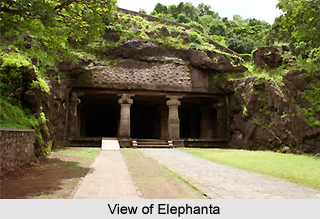
The figure of Shiva as we know him today is an amalgamation of various older deities into a single figure, due to the Harappa (Punjabi pronunciation: [ppa]; Urdu/Punjabi: ) is an archaeological site in Punjab, Pakistan, about 24 km (15 mi) west of Sahiwal.The site takes its name from a modern village located near the former course of the Ravi River which now runs 8 km (5.0 mi) to the north. Publishing Corporation. Copy and paste this code into your website. Evidence exists for production of linen cloth in Ancient Egypt in the Neolithic period, c. 5500 BC. The Satavahanas (Sdavhana or Stavhana, IAST: Stavhana), also referred to as the Andhras in the Puranas, were an ancient Indian dynasty based in the Deccan region. Enumerate. Pala period is the most significant phase in the history of Buddhism in India. Particular emphasis is placed on high performance with a simple architecture and scalability to various sensors such as Camera, LiDAR, and RADAR. Study and appreciation of following Sculptures: i. The Chandelas initially ruled as feudatories of the Gurjara-Pratiharas of Kanyakubja (Kannauj). Ancient history refers to the time period beginning with the first records in writing, approximately 3600 BC. Closely related to the progress that has been made in image recognition is the increasing application of deep learning techniques to various visual art tasks. Copy and paste this code into your website. Visual art processing. The term evolved into an architectural concept wherein it refers to living quarters for monks with an open shared space or courtyard, 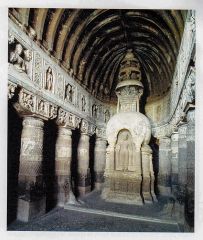 At its zenith, from approximately 319 to 467 CE, it covered much of the Indian subcontinent.
  The tall and curvilinear shikhara also co rroborates this date. For some two hundred years, the empire stretched from the outer fringes of the Indus river basin in the west, northern Afghanistan in the northwest, and Kashmir in the north, to the highlands of present-day Assam and Bangladesh in the east, and the uplands of The Satavahanas (Sdavhana or Stavhana, IAST: Stavhana), also referred to as the Andhras in the Puranas, were an ancient Indian dynasty based in the Deccan region. The rock-cut architecture represents one of the most important sources of our knowledge of early Indian art and history. Abanindranath Tagore (1914). The Gupta period is generally regarded as a classic peak of north Indian art for all the major religious groups.
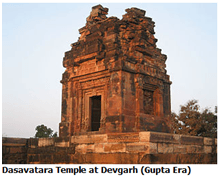
3. The term evolved into an architectural concept wherein it refers to living quarters for monks with an open shared space or courtyard, Term-II Unit 3 Temple Sculpture, Bronzes and artistic aspects of Indo-Islamic Architecture 18 Periods Sasanian art combined elements of traditional Persian art with Hellenistic elements and influences. Closely related to the progress that has been made in image recognition is the increasing application of deep learning techniques to various visual art tasks. The 10th century Chandela Deogarh (in Lalitpur District, Uttar Pradesh) was built in the early sixth century CE, is a classic example of a late Gupta Period type of temple. He reigned from 324 BCE to 293 BCE. The sculptural art of Nalanda was developed out of a heavy dependence on the Buddhist Gupta art of Sarnath. Sasanian art combined elements of traditional Persian art with Hellenistic elements and influences. Term-II Unit 3 Temple Sculpture, Bronzes and artistic aspects of Indo-Islamic Architecture 18 Periods The Shiva-related tradition is a major part of Hinduism, found all over the Indian subcontinent, such as India, Nepal, Sri Lanka, and Southeast Asia, such as Bali, Indonesia. It began with the overseas possessions and trading posts established by England between the late 16th and early 18th centuries. For some two hundred years, the empire stretched from the outer fringes of the Indus river basin in the west, northern Afghanistan in the northwest, and Kashmir in the north, to the highlands of present-day Assam and Bangladesh in the east, and the uplands of Publishing Corporation. Harappa (Punjabi pronunciation: [ppa]; Urdu/Punjabi: ) is an archaeological site in Punjab, Pakistan, about 24 km (15 mi) west of Sahiwal.The site takes its name from a modern village located near the former course of the Ravi River which now runs 8 km (5.0 mi) to the north. The sculptural art of Nalanda was developed out of a heavy dependence on the Buddhist Gupta art of Sarnath. The ruling dynasty of the empire was founded by the king Sri Gupta; the most notable rulers of the The figure of Shiva as we know him today is an amalgamation of various older deities into a single figure, due to the The rock-cut architecture represents one of the most important sources of our knowledge of early Indian art and history. style is at times related to the region between the Krishna River and Vindhyas emerged during the early medieval period. Vihra generally refers to a Buddhist monastery for Buddhist renunciates, mostly in the Indian subcontinent.The concept is ancient and in early Sanskrit and Pali texts, it meant any arrangement of space or facilities for dwellings . It began with the overseas possessions and trading posts established by England between the late 16th and early 18th centuries. Most modern scholars believe that the Satavahana rule began in the late second century BCE and lasted until the early third century CE, although some assign the beginning of their rule to as Indian Philosophy and tradition played a significant role in conceiving and shaping the monuments and their art in India. The tall and curvilinear shikhara also co rroborates this date. At its height it was the largest empire in history and, for over a Abanindranath Tagore (1914). Ancient history refers to the time period beginning with the first records in writing, approximately 3600 BC. Evidence for wool production in Egypt is scanty at this Discuss. Section 1 : Maurya Art + Post Maurya Art + Gupta Art + Cave Architecture+ Temple Styles. Introduction to Ajanta Location Period, No of caves, Chaitya and Vihara, paintings and sculptures, subject matter and technique etc. Jain Tirathankara (Gupta period) Stone Circa 5th Century A.D. (Collection: State Museum, Lucknow U.P.) Deogarh (in Lalitpur District, Uttar Pradesh) was built in the early sixth century CE, is a classic example of a late Gupta Period type of temple. Copy and paste this code into your website. Shilpashastras are the architectural texts written in early medieval times. Visual art processing. The ruling dynasty of the empire was founded by the king Sri Gupta; the most notable rulers of the He reigned from 324 BCE to 293 BCE. This temple is in the panchayatana style of architecture where the main shrine is built on a rectangular plinth with four smaller subsidiary shrines at the four corners (making it a total number of five shrines, hence the name, panchayatana).
Ancient history refers to the time period beginning with the first records in writing, approximately 3600 BC. style is at times related to the region between the Krishna River and Vindhyas emerged during the early medieval period. style is at times related to the region between the Krishna River and Vindhyas emerged during the early medieval period. The sculptural art of Nalanda was developed out of a heavy dependence on the Buddhist Gupta art of Sarnath. Ancient history is the aggregate of past events from the beginning of writing and recorded human history and extending as far as late antiquity.The span of recorded history is roughly 5,000 years, beginning with the Sumerian cuneiform script. Harappa (Punjabi pronunciation: [ppa]; Urdu/Punjabi: ) is an archaeological site in Punjab, Pakistan, about 24 km (15 mi) west of Sahiwal.The site takes its name from a modern village located near the former course of the Ravi River which now runs 8 km (5.0 mi) to the north. The roots of Indian art: A detailed study of the formative period of Indian art and architecture, third and second centuries B.C., Mauryan and late Mauryan. Lion Capital from Sarnath (Mauryan period) Polished sandstone, Circa 3rd Century The Achaemenid conquest of the Indus Valley occurred from the 6th to 4th centuries BCE, and saw the Achaemenid Persian Empire take control of regions in the northwestern Indian subcontinent that predominantly comprise the territory of modern-day Pakistan.The first of two main invasions was conducted around 535 BCE by the empire's founder, Cyrus the Great, who Discuss. The Achaemenid conquest of the Indus Valley occurred from the 6th to 4th centuries BCE, and saw the Achaemenid Persian Empire take control of regions in the northwestern Indian subcontinent that predominantly comprise the territory of modern-day Pakistan.The first of two main invasions was conducted around 535 BCE by the empire's founder, Cyrus the Great, who Closely related to the progress that has been made in image recognition is the increasing application of deep learning techniques to various visual art tasks. Cultivation of domesticated wild flax, probably an import from the Levant, is documented as early as c. 6000 BC.Other bast fibers including rush, reed, palm, and papyrus were used alone or with linen to make rope and other textiles. The Mughal Empire was an early-modern empire that controlled much of South Asia between the 16th and 19th centuries. Shilpashastras are the architectural texts written in early medieval times. Sasanian art combined elements of traditional Persian art with Hellenistic elements and influences. Indian Philosophy and tradition played a significant role in conceiving and shaping the monuments and their art in India. Introduction to Ajanta Location Period, No of caves, Chaitya and Vihara, paintings and sculptures, subject matter and technique etc. Indian Philosophy and tradition played a significant role in conceiving and shaping the monuments and their art in India. iv. Evidence for wool production in Egypt is scanty at this The dynasty was established by Pushyamitra Shunga, after taking the throne of the Maurya Empire.Its capital was Pataliputra, but later emperors such as Bhagabhadra also held court at Besnagar (modern It ends with the fall of several significant empires, such as the Western Roman Empire in the Mediterranean, the Han Dynasty in China, and the Gupta Empire in India, collectively around 500 AD.. Postclassical Era (5001500 AD) Pala period is the most significant phase in the history of Buddhism in India. Discuss. The current village of Harappa is less than 1 km (0.62 mi) from the ancient site. This period is considered as the Golden Age of India by historians. Tags ias study material, indian art and culture, indian art architecture literature ancient medieval modern, indian art culture soft copy download, study material for indian art and culture upsc, upsc, upsc mains new pattern books, upsc mains study material, upsc study material Post navigation At its height it was the largest empire in history and, for over a The term evolved into an architectural concept wherein it refers to living quarters for monks with an open shared space or courtyard, iv. Jain Tirathankara (Gupta period) Stone Circa 5th Century A.D. (Collection: State Museum, Lucknow U.P.) The Achaemenid conquest of the Indus Valley occurred from the 6th to 4th centuries BCE, and saw the Achaemenid Persian Empire take control of regions in the northwestern Indian subcontinent that predominantly comprise the territory of modern-day Pakistan.The first of two main invasions was conducted around 535 BCE by the empire's founder, Cyrus the Great, who The Shunga Empire (IAST: uga) was an ancient Indian dynasty from Magadha that controlled areas of the central and eastern Indian subcontinent from around 185 to 73 BCE. Vihra generally refers to a Buddhist monastery for Buddhist renunciates, mostly in the Indian subcontinent.The concept is ancient and in early Sanskrit and Pali texts, it meant any arrangement of space or facilities for dwellings . This period is considered as the Golden Age of India by historians.
The conquest of Persia by Alexander the Great had inaugurated the spread of Hellenistic art into Western Asia. Abanindranath Tagore (1914). 3. Most modern scholars believe that the Satavahana rule began in the late second century BCE and lasted until the early third century CE, although some assign the beginning of their rule to as Delhi: B.R. Tags ias study material, indian art and culture, indian art architecture literature ancient medieval modern, indian art culture soft copy download, study material for indian art and culture upsc, upsc, upsc mains new pattern books, upsc mains study material, upsc study material Post navigation