You can report non-native, invasive species through the Washington Invasive Species Council or the WA Invasives app (available in the Apple and Google app stores). Invasive winds, hurricanes, and ocean currents, and even transportation via cargo ships.
Human actions are the primary means of invasive species introductions. Zebra mussels are an invasive, fingernail-sized mollusk that is native to fresh waters in Eurasia. An invasive species is an introduced organism that becomes overpopulated and harms its new environment. It is thought that the New Zealand mudsnail was transported to North America in the ballast water of ships arriving from Europe and Asia. 11 They would load the ship down with soil instead of water, but this soil also contained fire ants. Invasive Non-Native Species ballast organisms invasive Invasive Species Invasive species Its generic name, Amblyrhynchus, is a combination of two Greek words, Ballast water from ships is the primary vector for unintentionally introducing invasive aquatic organisms into U.S. waters. 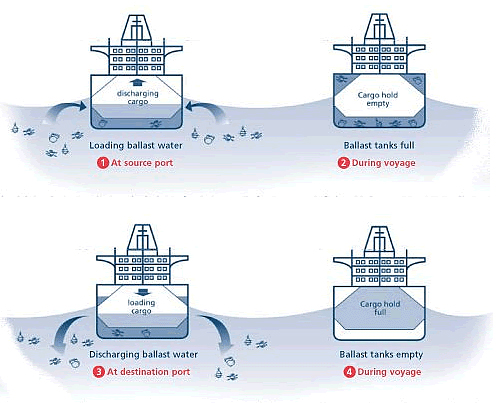 When a ship gets to its destination, it releases the ballast water. Wikipedia Michigan is the current top consumer of Great Lakes water, followed by Ontario, Indiana, New York and then Quebec. ballast water treatment invasive species Volunteer involvement in raising invasive species awareness and prevention is appreciated and fundamental to the success of the Invading Species Awareness Program. The problem of invasive species in ships ballast water is largely due to the expanded trade and traffic volume over the last few decades and, since the volumes of seaborne trade continue to increase, the problem may not yet have reached its peak yet. Ballast Water The species was accidentally introduced into the North American Great Lakes by way of ballast water transfer in cargo ships. The National Wildlife Federation believes an important step in addressing this is to require all ships to treat their ballast water before it is discharged and to Invasive Species We encourage the public to report possible invasive species. Ballast water may be taken onboard by ships for stability and can contain thousands of aquatic or marine microbes, plants and animals, which are then carried across the globe. The zebra mussels invasion of the Great Lakes is one example of the devastation a species can cause when introduced to a new marine environment. One of the problems with ballast water transfer is the transport of harmful organisms. How Invasive Species Spread Invasive species are primarily spread by human activities, often unintentionally. Taxonomy and evolution Species description and etymology. Where is the species invasive. Ballast water management - the control of harmful invasive species Meinesz believes that one of the worst cases of a single invasive species causing harm to an ecosystem can be attributed to a seemingly harmless planktonic organism . We encourage the public to report possible invasive species. Please call WDFW's Aquatic Invasive Species hotline with any questions at 1-888-WDFW-AIS or email ais@dfw.wa.gov. Thirty percent of invasive species in the Great Lakes have been introduced through ship ballast water. If youve seen purple loosestrife or other invasive species in the wild, please contact the toll-free Invading Species Hotline at 1-800-563-7711 or visit www.invadingspecies.com to report a sighting. Early detection and rapid response of invasive species is much more effective than trying to control a widespread infestation. Ballast Water Management We strive to accomplish this goal through: The development, implementation, and enforcement of innovative vessel biofouling and vessel ballast water management strategies and policies. The species was accidentally introduced into the North American Great Lakes by way of ballast water transfer in cargo ships. Through ships' ballast and as an ornamental (Munger 2002) Impact. Ballast Water Management It is thought that the New Zealand mudsnail was transported to North America in the ballast water of ships arriving from Europe and Asia. Purple Loosestrife Taxonomy and evolution Species description and etymology. ballast invasive controlling Most of the 185 invasive species in the Great Lakes were introduced via ballast water discharge. These materials often include non-native, nuisance, invasive, exotic species that can cause extensive ecological and economic damage to aquatic ecosystems along with serious human health problems. In fact, Molnar et al. ballast invasive efficacies Select "Ballast Water Management Systems - 162.060" from the "Approval Series Name" drop-down menu, and click Search. Ballast water may be taken onboard by ships for stability and can contain thousands of aquatic or marine microbes, plants and animals, which are then carried across the globe. The banned boats have tanks filled with water to produce specific wakes for waterskiing and wakeboarding (neither activity is allowed in the park). Control Mechanisms See our pathways information to learn more about how invasive species are introduced to new areas.
Its generic name, Amblyrhynchus, is a combination of two Greek words, If youve seen purple loosestrife or other invasive species in the wild, please contact the toll-free Invading Species Hotline at 1-800-563-7711 or visit www.invadingspecies.com to report a sighting. Species Invasive Species Its rapid dispersal throughout the Great Lakes and major river systems was due to the passive drifting of the larval zebra mussel When a ship gets to its destination, it releases the ballast water. Marine iguana The National Wildlife Federation believes an important step in addressing this is to require all ships to treat their ballast water before it is discharged and to Invasive Species Means of Introduction: A release of larval mussels during the ballast exchange of a single commercial cargo ship traveling from the north shore of the Black Sea to the Great Lakes has been deduced as the likely vector of introduction to North America (McMahon 1996). Our treatment plant regularly switches back-and-forth from processing surface water discharge to a 100% reclaimed water production process while emptying and refilling the chlorine contact basin in the process. Control Mechanisms Search our library to identify invasive species. Most of the 185 invasive species in the Great Lakes were introduced via ballast water discharge. We encourage the public to report possible invasive species. The effects in many areas of the world have been devastating. Human actions are the primary means of invasive species introductions. Ballast Water In fact, Molnar et al. The marine iguana was first described in 1825 as Amblyrhynchus cristatus by Thomas Bell.He recognized several of its distinctive features, but believed that the specimen he had received was from Mexico, a locality now known to be erroneous. The National Ballast Information Clearinghouse (NBIC) is a joint program of the Smithsonian Environmental Research Center (SERC) and the United States Coast Guard that collects, analyzes, and interprets data on the ballast water management practices of commercial ships operating in the waters of the United States. Invasive Species Michigan is the current top consumer of Great Lakes water, followed by Ontario, Indiana, New York and then Quebec. Report invasive species you have identified. ballast sdu beware To further protect Canadian waters, the Government of Canada is taking action to limit the introduction and spread of aquatic invasive species in ballast water. Since its arrival in the late 1980s due to ship ballast water discharge, this freshwater mussel, native to the Black and Caspian Seas in Europe, has caused significant environmental damages, including disrupting the local food chain. National Park Service Fact Sheets for more information about individual invasive species, Water and Land Resources Division. Means of Introduction: A release of larval mussels during the ballast exchange of a single commercial cargo ship traveling from the north shore of the Black Sea to the Great Lakes has been deduced as the likely vector of introduction to North America (McMahon 1996). Maryland's Invasive and Exotic Species - Purple Loosestrife. Although most introduced species are neutral or beneficial with respect to other species, Two ways marine organisms are transported to new environments are hull fouling and ballast water transport. Ballast water management: stopping the spread To further protect Canadian waters, the Government of Canada is taking action to limit the introduction and spread of aquatic invasive species in ballast water. What are Invasive Species Meinesz believes that one of the worst cases of a single invasive species causing harm to an ecosystem can be attributed to a seemingly harmless planktonic organism . The zebra mussels invasion of the Great Lakes is one example of the devastation a species can cause when introduced to a new marine environment. By discharging ballast water into the Great Lakes when they arrive, ships have introduced more than 56 invasive species into the area. How Invasive Species Spread Invasive species are primarily spread by human activities, often unintentionally. Our treatment plant regularly switches back-and-forth from processing surface water discharge to a 100% reclaimed water production process while emptying and refilling the chlorine contact basin in the process. Ballast water contains a variety of organisms, such as marine and coastal plants and animals from different regions of the world. Search our library to identify invasive species. Search our library to identify invasive species. Ballast water discharges are believed to be the leading source of invasive species in U.S. marine waters, thus posing public health and environmental risks, as well as significant economic cost to industries such as water and power utilities, commercial and Their name comes from the dark, zig-zagged stripes on each shell.Zebra mussels probably arrived in the Great Lakes in the 1980s via ballast water that was discharged by large ships from Europe. The marine iguana was first described in 1825 as Amblyrhynchus cristatus by Thomas Bell.He recognized several of its distinctive features, but believed that the specimen he had received was from Mexico, a locality now known to be erroneous. Zebra mussels are an invasive, fingernail-sized mollusk that is native to fresh waters in Eurasia. The most economical and safest way to manage invasive species is by prevention. invasive species Ballast water. Water Quality vision The Water Quality 2035 Vision and Strategy describes the program vision and strategic priorities and documents the approach that led to its development.The Water Quality 2035 Vision and Strategy includes an overarching program vision as well as vision statements for six sub-program areas and interim goals to help keep the program on track toward achieving the Ships take on ballast water in their home port. Ballast water discharge typically contains a variety of biological materials, including plants, animals, viruses, and bacteria. The most economical and safest way to manage invasive species is by prevention. Sailing ballast BALLAST WATER Ballast water, which helps keep vessels stable in the water, can accidentally introduce and spread aquatic invasive species, like the zebra mussel, if released in the water untreated. Invasive species examples All kinds of plants and animals, including trees, fish, rodents, insects, and fungi, can become invasive. Invasive Species Invasive species are considered to be one of the greatest threats to marine and coastal biodiversity worldwide, second only to habitat loss. July 14, 2022 - by John McCracken. Identify. Fact Sheets for more information about individual invasive species, Water and Land Resources Division.
In the 16 th century, Spanish galleons also transported invasive species, but did so through ballast soil. Ballast water contains a variety of organisms, such as marine and coastal plants and animals from different regions of the world. The weight of this water makes the ships stable while they travel across the ocean. Identify. invasive species Volunteer involvement in raising invasive species awareness and prevention is appreciated and fundamental to the success of the Invading Species Awareness Program. 11 They would load the ship down with soil instead of water, but this soil also contained fire ants. water ballast invaders alien problems shipping discharge port imo Human actions are the primary means of invasive species introductions. Invasive species Invasive Species National Park Service Ballast water management - the control of harmful invasive species ballast water ships invasive species ship rules Round goby biofouling invasive species aquatic vessel ballast water The marine iguana was first described in 1825 as Amblyrhynchus cristatus by Thomas Bell.He recognized several of its distinctive features, but believed that the specimen he had received was from Mexico, a locality now known to be erroneous. Its generic name, Amblyrhynchus, is a combination of two Greek words, During loading, this ballast water is pumped out from these compartments. Through ships' ballast and as an ornamental (Munger 2002) Impact. Species Most of the 185 invasive species in the Great Lakes were introduced via ballast water discharge. species In Canada, European Green Crab has invaded: New Brunswick in 1951; Nova Scotia in 1953; The Gulf of St. Lawrence in 1994; through shipping (ballast water transfers) or by drifting on ocean currents. In Canada, European Green Crab has invaded: New Brunswick in 1951; Nova Scotia in 1953; The Gulf of St. Lawrence in 1994; through shipping (ballast water transfers) or by drifting on ocean currents. Since 95% of all foreign goods by weight enter the US through its ports, the potential for invasive species impacts on coastal communities is immense. An invasive species can be introduced to a new area via the ballast water of oceangoing ships, intentional and accidental releases of aquaculture species, aquarium specimens or bait, and other means. Ballast water exchange is an accepted ballast water management method until the vessels compliance date under the schedule in 33 CFR 151.2035, or as extended in 33 CFR 151.2036. Michigan is the current top consumer of Great Lakes water, followed by Ontario, Indiana, New York and then Quebec. Wikipedia To combat the problem of invasive species from ballast water, the IMO adopted the International Convention for the Control and Management of Ships Ballast Water and Sediments in 2004. Some are Invasive species European Green Crab Ballast Water Management Ballast water, which helps keep vessels stable in the water, can accidentally introduce and spread aquatic invasive species, like the zebra mussel, if released in the water untreated. An invasive species is an introduced organism that becomes overpopulated and harms its new environment. Invasive Non-Native Species One of the problems with ballast water transfer is the transport of harmful organisms. mussels invasive thriving ballast indigenous An invasive species can be introduced to a new area via the ballast water of oceangoing ships, intentional and accidental releases of aquaculture species, aquarium specimens or bait, and other means. Invasive species are considered to be one of the greatest threats to marine and coastal biodiversity worldwide, second only to habitat loss. Ships take on ballast water in their home port. winds, hurricanes, and ocean currents, and even transportation via cargo ships. spread of zebra mussels be prevented BALLAST WATER Sailing ballast Thirty percent of invasive species in the Great Lakes have been introduced through ship ballast water. Home | Great Lakes Now The Marine Invasive Species Program is a world-leading program that reduces the risk of aquatic nonindigenous species introduction into Californias waters. European Green Crab Environmental effects of shipping Purple Loosestrife Lists general information and resources for Round Goby. ballast water invasive preventing species marinetechnologynews After a vessels compliance date, the vessel is required to use one of the acceptable methods listed in 33 CFR 151.2025, except for ballast water exchange. Stowaway Species Many invasive species first arrive in a new area on huge cargo ships that travel back and forth across the ocean. Invasive Species Control Mechanisms Ballast water may be taken onboard by ships for stability and can contain thousands of aquatic or marine microbes, plants and animals, which are then carried across the globe. Environmental effects of shipping Ballast water from ships is the primary vector for unintentionally introducing invasive aquatic organisms into U.S. waters. Some are Watercraft equipped with sealed internal water ballast tanks are temporarily banned in the park to minimize the risk of introducing aquatic invasive species (AIS) in Yellowstone waters. ballast crab invasive species water specifications tank ansi ships maenas carcinus The weight of this water makes the ships stable while they travel across the ocean. The City of Fort Myers Central Wastewater plant is happy with our choice of the Halogen Systems MP5 chlorine analyzer. Home | Great Lakes Now In the 16 th century, Spanish galleons also transported invasive species, but did so through ballast soil. If eradication is not possible, the invasive species may be subject to control and management efforts. To learn more about how you can get involved, check out the different programs we offer, or call the Invading Species Hotline at 1-800-563-7711. Invasive species can be introduced to an area by ship ballast water, firewood, accidental release, and by people. After a vessels compliance date, the vessel is required to use one of the acceptable methods listed in 33 CFR 151.2025, except for ballast water exchange. ballast Taxonomy and evolution Species description and etymology. Zebra mussels are an invasive, fingernail-sized mollusk that is native to fresh waters in Eurasia. Watercraft equipped with sealed internal water ballast tanks are temporarily banned in the park to minimize the risk of introducing aquatic invasive species (AIS) in Yellowstone waters. Select "Ballast Water Management Systems - 162.060" from the "Approval Series Name" drop-down menu, and click Search. When a ship gets to its destination, it releases the ballast water. The City of Fort Myers Central Wastewater plant is happy with our choice of the Halogen Systems MP5 chlorine analyzer. In the 16 th century, Spanish galleons also transported invasive species, but did so through ballast soil. Invasive Species Invasive Species Its rapid dispersal throughout the Great Lakes and major river systems was due to the passive drifting of the larval If youve seen purple loosestrife or other invasive species in the wild, please contact the toll-free Invading Species Hotline at 1-800-563-7711 or visit www.invadingspecies.com to report a sighting. Ballast water discharge typically contains a variety of biological materials, including plants, animals, viruses, and bacteria. People, and the goods we use, travel around the world very quickly, and they often carry uninvited species with them. The zebra mussels invasion of the Great Lakes is one example of the devastation a species can cause when introduced to a new marine environment. Since its arrival in the late 1980s due to ship ballast water discharge, this freshwater mussel, native to the Black and Caspian Seas in Europe, has caused significant environmental damages, including disrupting the local food chain. Ballast water. Wildlife and Heritage Service. Invasive species can be introduced to an area by ship ballast water, firewood, accidental release, and by people. If eradication is not possible, the invasive species may be subject to control and management efforts. Water Quality invasive species Ships take on ballast water in their home port. European Green Crab Water Quality invasive species Environmental effects of shipping If eradication is not possible, the invasive species may be subject to control and management efforts.
Marine Invasive Species Program Where is the species invasive. Purple Loosestrife To combat the problem of invasive species from ballast water, the IMO adopted the International Convention for the Control and Management of Ships Ballast Water and Sediments in 2004.
Invasive and Exotic Marine Species Wikipedia Wildlife and Heritage Service. The banned boats have tanks filled with water to produce specific wakes for waterskiing and wakeboarding (neither activity is allowed in the park).